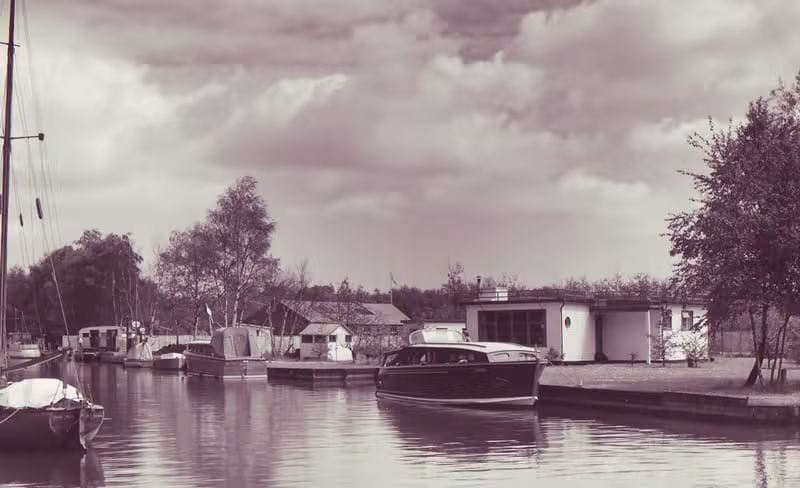
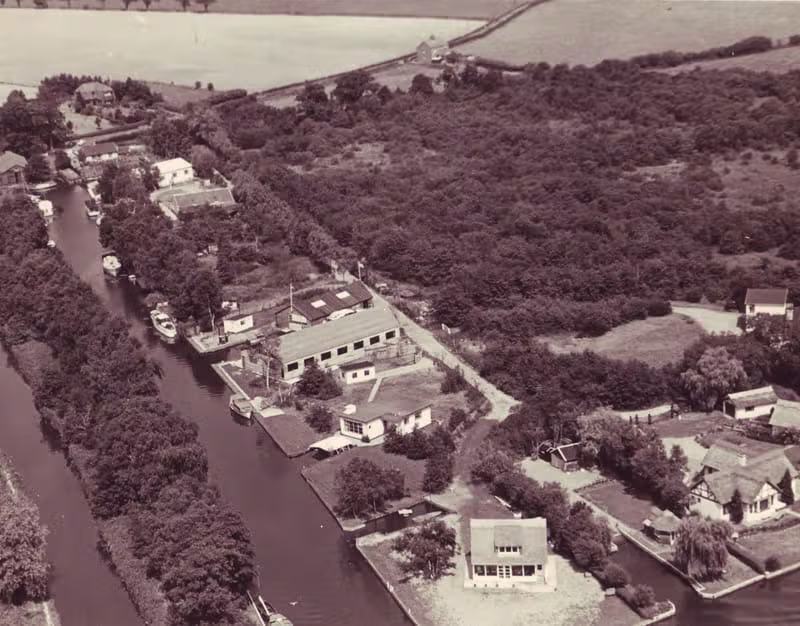
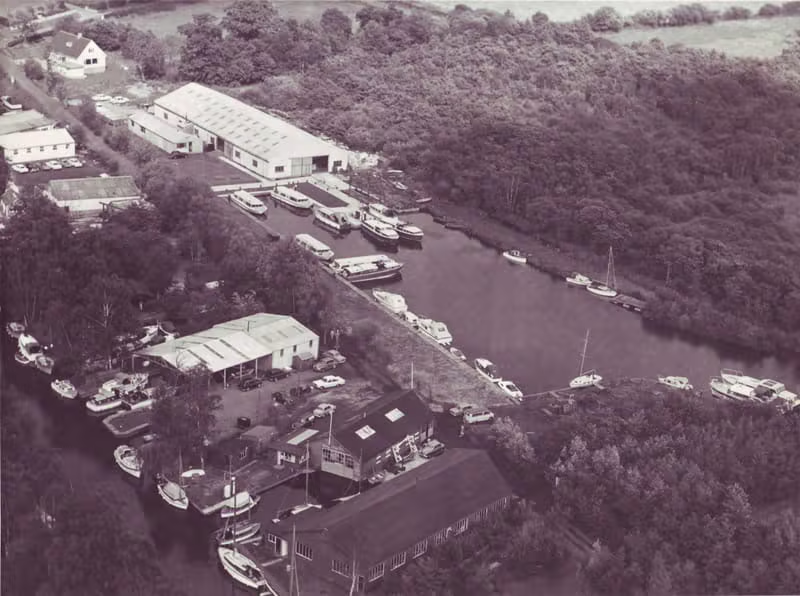
Frank Wilds, a builder by trade moved with his family from Coventry to Norfolk where he established a small boatyard on Woods Dyke in Horning.
This was also the family home - with everyone originally living and sleeping in a caravan and the boatyard buildings whilst a bungalow was built at the site
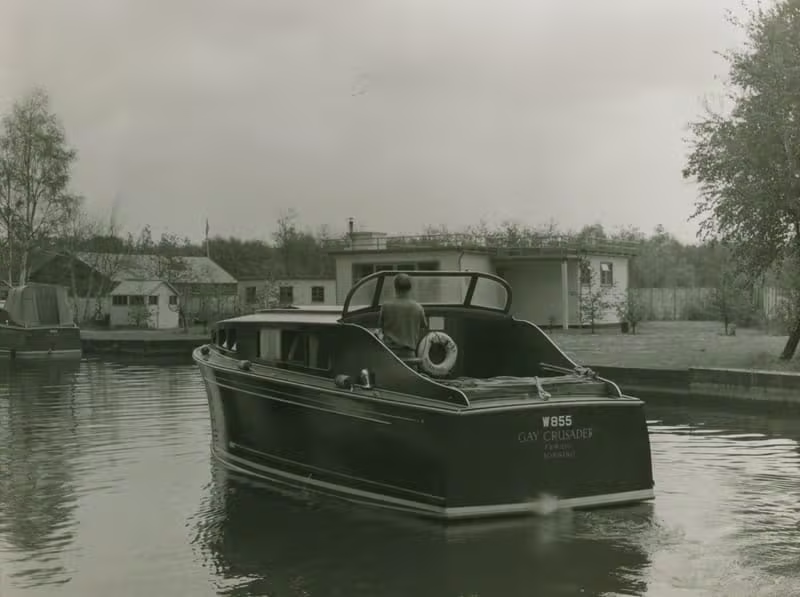
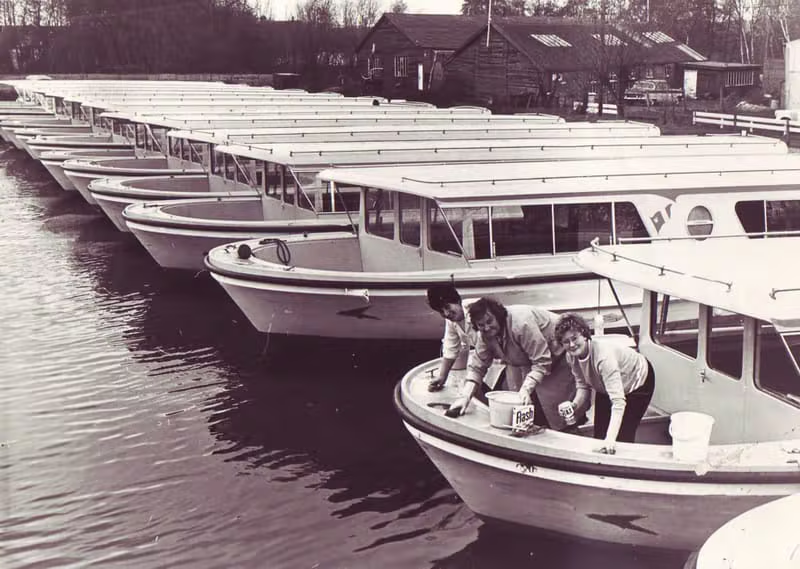
The fleet originally consisted of traditional, wooden motor cruisers, some of which the company built themselves at Horning.
Frank Wilds had a vision of a low maintenance, single level motor cruiser with modern day comforts, ideal for holidays and designed with families and all age groups in mind.
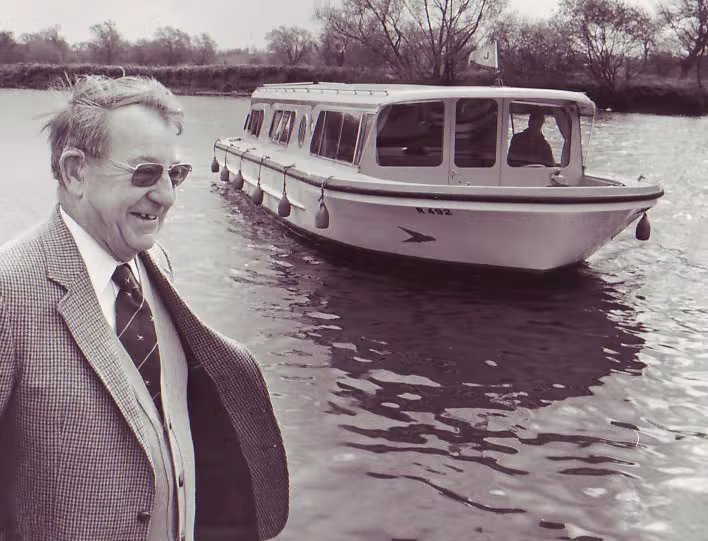
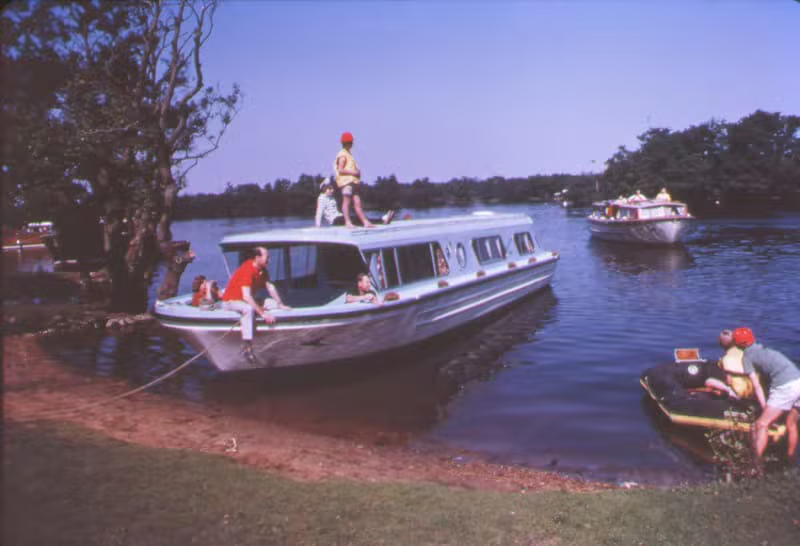
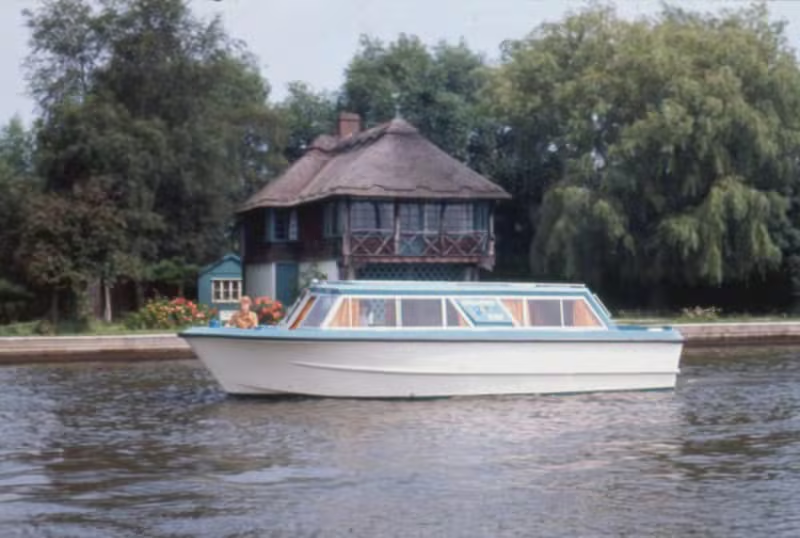
Frank Wilds’ “Caribbean” was launched for 1966. Different in design to anything on hire at the time, and standing out in the hire brochures like a sore thumb!
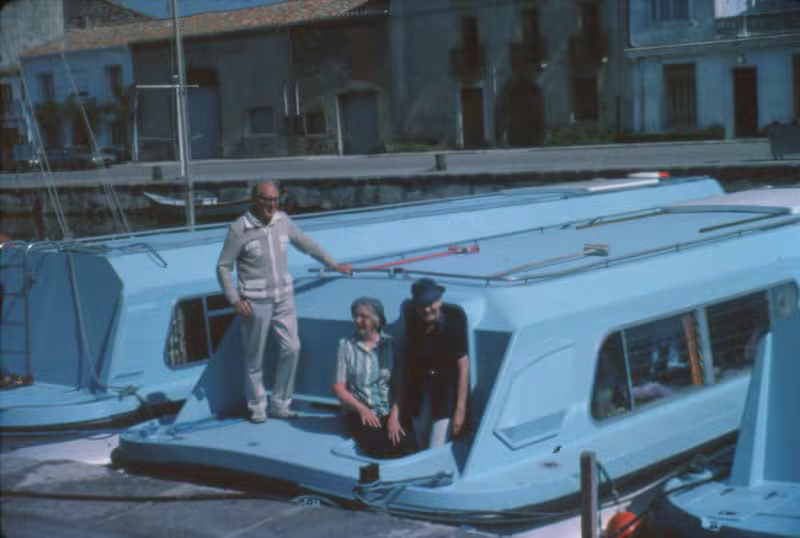
Designed around comfort, practicality and safety it's single floor level, generous 12ft beam, spacious cabins and galleys, forward steer, aft/quiet engine, blown air heating, power ventilation and fibreglass construction was unique and years ahead of its time.
The single level design allowed easy access off and on plus made mooring easier. It’s forward well allowed some of the party, including pets, elderly or those less agile to sit outside and still enjoy the holiday. Children would be in sight of Mum and Dad whether in the forward saloon or sat in the forward well.
The sociable forward steering position gave good, cosy conditions for less brilliant weather and a clear view of the river ahead.
With the success of the Caribbean design the base was moved from Woods Dyke to a new location just behind it. An area of marshland was dug out into a large marina on what is now the Riverside Estate. Frank designed and built a bungalow at the entrance to the marina that was the new family home.
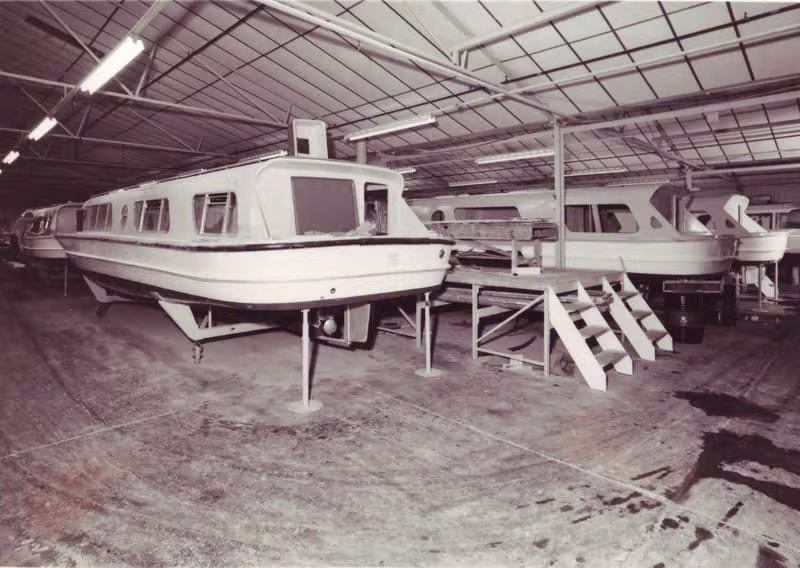
With demand increasing and Horning struggling to be able to match demand a factory at Beccles Road, Loddon was acquired to build the Wilds' craft under the name of Caribbean Cruisers and new sister variants and sizes were added.
Such was the demand that a production line was set up and even the window frames were produced in-house!
In addition to their own fleet the company was now also building for many other operators in the UK and abroad plus for some private owners too.
Of course not everyone was to keen on such a radical, new design.
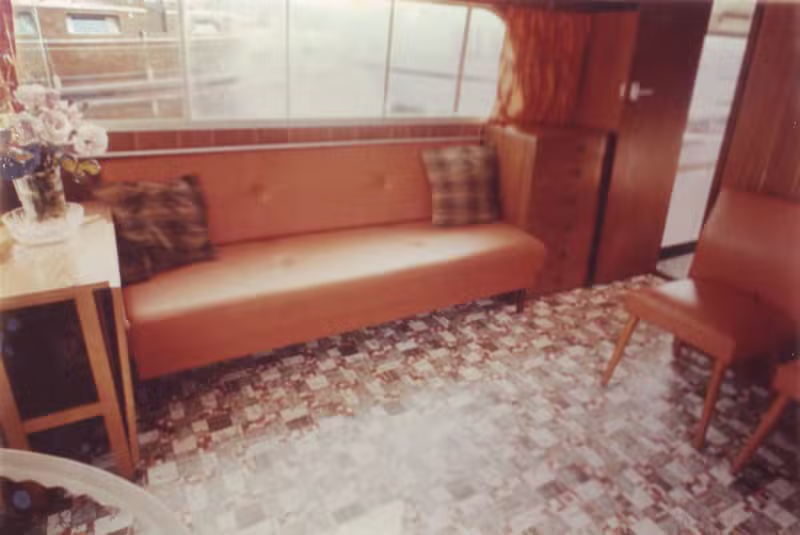
There were many benefits to this new luxury cruiser - generous cabin space with high levels of comfort including modern free standing household type furniture, continuous headroom and floor level, straight-ish sides and late tapering bow design making fitout and comfort incredible.
As a disadvantage the handling was not as responsive or pleasureable as more traditional designs, and high cross winds could also make steering fun!
This new design was not what traditionalist's considered to be a boat! These trait's were to earn the design nicknames such as floating caravans, prefabs, bathtubs and soap-dishes!
The fleet also pioneered warm air central heating - a system that is now considered to be the best form of heating, but was a new luxury back in the '60s.
These were still quite early days of GRP boat production and so whilst layup was quite thick, there was less knowledge in some areas such as layup temperatures for example.
Their reasonable lifespan of this recent GRP construction was also not really known, and was sometimes thought and built on the thought of ten years! Areas such as potential repairs being workable around the fitout and access under floors etc were not as well forecast as would have been ideal, probably due to this infancy of the new design. Later companies would improve such design considerations and in so doing remove some associated difiiculty and restriction.
Sixty years on and most are still about, albeit in private ownership.
In 1973 (out of Franks’ refusal to sell the mould tools to them to make their own from scratch) a company called Bounty Boats launched their own similar design, with all key factors copied from the Caribbean.
With the benefit of seven years since the Caribbean’s launch this saw a few improved features and a slightly more modern style.
The rear door was also switched to the other side, allowing the cabins to run to the other side and with that the helm could easily be kept 'on the left' with less considerations or space taken.
Bounty's “Buccaneer 37” (also known as Solar 37 initially and Bounty 37) went on to succeed and outsell the Caribbean.
Bounty did sell the mould to any fleets wanting them, and this contributed to their success, especially in hirefleets who could then mould their own.
Bounty became the most successful in their market at that time with a wide range of different designs as well as their highly popular Buccaneer range .... all coming from a design inspired and developed on from the original F B Wilds concept.
Frank Wilds retired in 1978.
The hirefleet was sold to the Guinness Group, and the name Toucan Afloat was then included for a short time.
Around 1983 this became Blue Line. They in turn were bought by Richardsons in 1986 and the name was used a short while longer, changing to Horning Pleasurecraft for 1988.
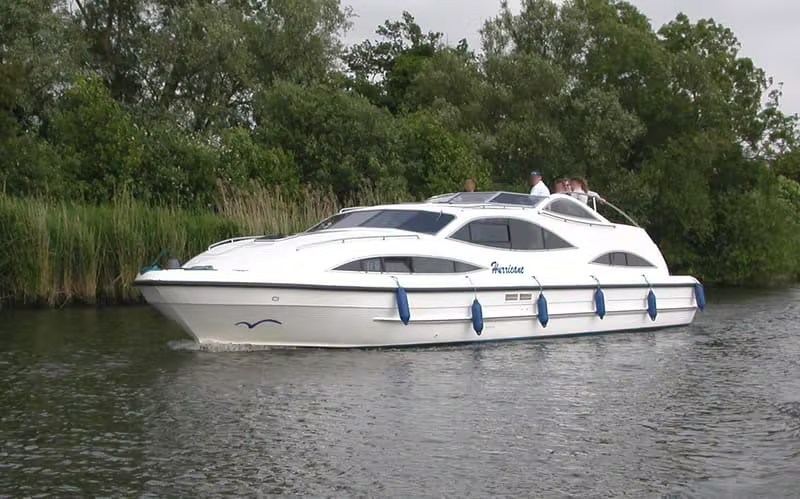
The moulds were bought in 1978 by Alpha Craft and the hulls were used unchanged in design but put into different lengths with newly designed superstructures. Even with minor changes such as moulded rear boarding platforms for easier rear access (that came much later) the hull in the main is that Bermuda/Bahama design from so many years ago.
When Alpha Craft closed in 2015 the moulds were bought by Barnes Brinkcraft who have done a similar thing... superstructures may have been adapted but the hull carries on, even today!
Under Richardsons Group ownership (1986-2020) many of the fleet ran on, some were re-furbished, and some were swapped about with the companies other starting points and a wider range of different styles of craft were added to the Horning fleet.
In 2004 about forty of these legendary single level F.B.Wilds craft were still in the Horning fleet. Sadly, at the end of 2004 the owners closed the base.
Half the fleet were put up for sale, the other half were transferred to Stalham where the Horning Pleasurecraft carried on before disappearing later as the fleet got amalgamated and marketed under the Richardsons name, and gradually all the F.B.Wilds built craft have now left their fleet.
Most F.B.Wilds built craft are now with private owners, still giving service and enjoyment, in some cases after sixty years!
In 2005 the Horning site became a private mooring basin and a brokerage (boat sales) yard.
The hustle and bustle of holiday turn-arounds at the site was to fall silent, but not for long.
Mid season 2009 Le Boat, a large multi based operator moved into part of the site, leasing it from the owners (Richardsons Group).
Due to the harsh Economic climate abroad and in Ireland and the popularity of UK holidays they brought their Wroxham fleet and a lot of craft from their bases in Ireland to run from Horning.
Some of the basin was to remain largely private moorings, with the hirefleet occupying some of the buildings once again.
This carried on for a while before some of the fleet was sold to Herbert Woods and the remaining ones returned to other bases and waterways. Le Boat's last season at Horning was 2013.
The site continued to be private moorings operated as Richardsons Horning Marina, and for 2016 Far Horizon, a boat to tall to operate for hire from Stalham moved from Acle, and a couple of Sunway's soon joined her for similar reasons. In 2020 the yard was sold by Richardsons Group to Clive Richardson and the Horning Pleasurecraft name returned.